TRUMP DERANGEMENT SYNDROME: interpretations of political violence
Monica Moran 5/11/2026
From the standpoint of Frankl’s logotherapy, TDS is not a diagnosisis but instead a series of substitutes for meaning. It functions as a rhetorical device within a larger ecosystem of political violence. Psychology Today notes that TDS does not appear in the DSM‑5 and has no clinical documentation.
The term was first used in 2003 by Charles Krauthammer, originally described as Bush Derangement Syndrome. However, recently the Research Act of 2025 (H.R. 3432) proposes NIH‑supported research into behavioral and psychological reactions to Trump.
One theory, within the context of data‑center architectures, is conceptually rich; a connection between meaning‑crisis and political hysteria. This can be seen in the notable rise in “man camps”—temporary worker villages originally used in oil fields now repurposed for data center construction, crypto mining, and AI infrastructure; and are often observably the source of these types of behavioral and psychological reactions. Some suggest these conditions could quickly translate into political violence. And a recent report by Gizmodo frames this as a rising concern due to the parallels simulating ICE detention‑camp contractors.
This intersects with Frankl’s ideas, whether political, bureaucratic, or technological—by creating environments where people seek substitute identities (political, religious, conspiratorial). Opinions vary however, acting on those identities becomes much easier within a social construction that facilitates consensus such as a quasi-company town. The numerous attempts on President Trump’s life support this idea of acting within, as Frankl noted, systems of extreme control.
Frankl’s warning that meaning is destroyed when narratives are externally imposed and individuals cannot interpret their own experience, seems to have a correlation to data center architecture. Here, political violence is often conceptualized as physical force.
The reliance within the modern political system on symbolic infrastructural forms of discourse, such as social media, can deploy language to frame conflict as political or legal-justice as suggested in the Butler, Pennsylvania assassination attempt.
TDS can be seen as a rhetorical construction; Bush Derangement Syndrome, in 2003 was described as “general hysteria”. More recently Fareed Zakaria's definition is “hatred of President Trump so intense that it impairs people’s judgment.” Judgment mirrored in proto-legal and institutional settings seen as politically motivated. Viktor Frankl’s logotherapy describes a meaning‑centered phenomenon within the framework of a proto-legal action which can reexamine the Butler assassination attempt through an interpretive lens.
Frankl argued that “political identity becomes a substitute for meaning”.
Political violence can also serve as an exchange model for religious violence when meaning-making structures are disrupted or denied through censorship or content control and often seen as algorithmic within the context of online access.
A recent report on the war with Iran provides a narrative of striking dependence on such access. “For instance, Iran’s digital sector, once a symbol of the country’s potential, has been brought to its knees by a severe, government-imposed internet shutdown.” The New York Times reported a statement by Hadi Farnoud, a company founder, “‘After two wars and months of internet shutdown, we could no longer bypass the crisis.” This statement illustrates one example of media systems and the infrastructure of control. Political violence today is seen as one and the same as the architectures that formulate discourse. The same parties controlling physical infrastructure increasingly control discussive infrastructure.
The behavioral symptoms in individuals described in TDS discourse—fainting, vomiting, hysteria, are often the same parties regulating discussion within these architectures. Political rallies, religious services, and online echo chambers all function as meaning.
TDS is a symptom of this larger system—a cultural expression of a society struggling to locate meaning in an era of spectacle economics, technological dominance, and institutional fragmentation.
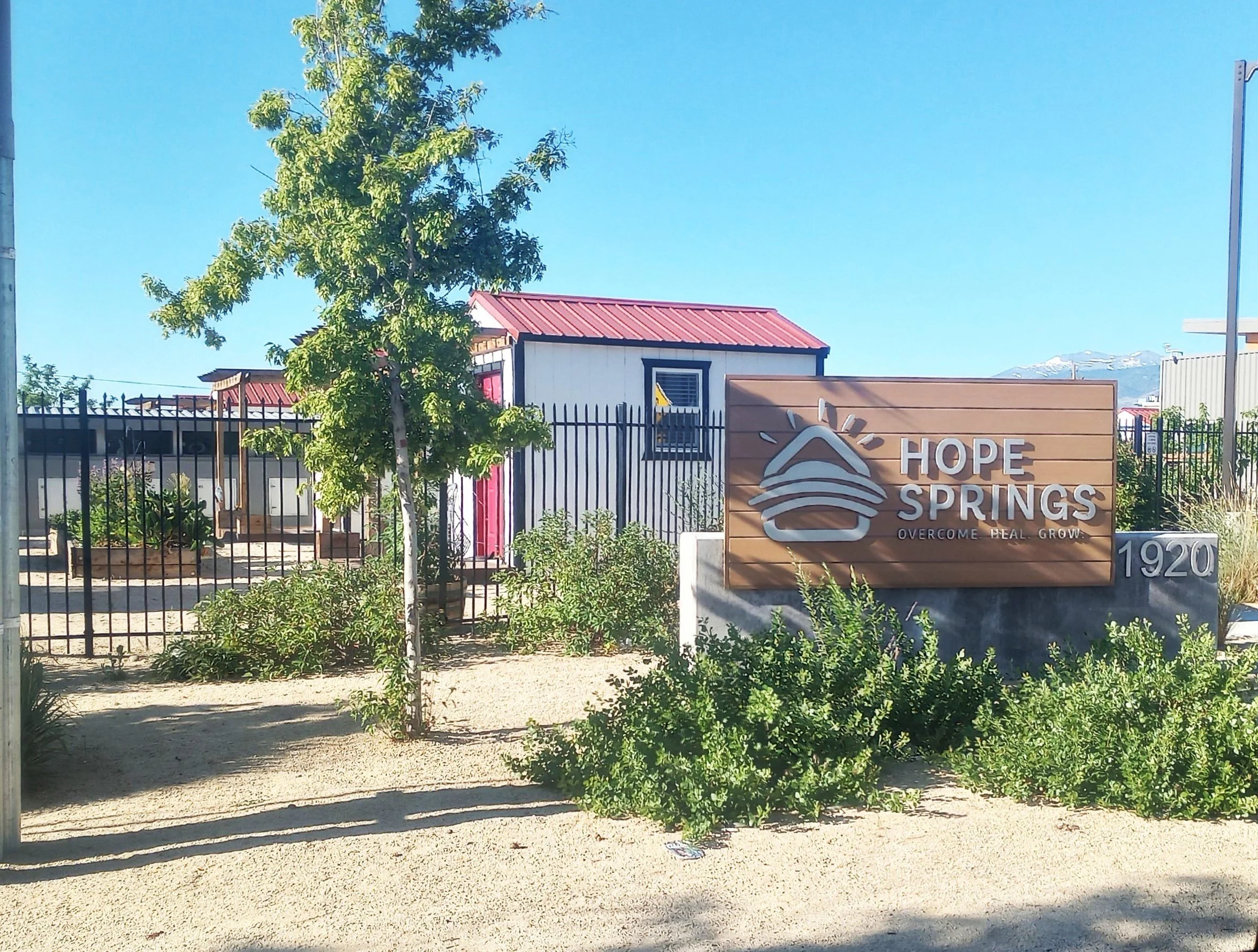
Hope Springs, Sparks, Nevada