
the optimus gen 3 platform: review
Tesla initiated mass production of its Optimus Gen 3 platform at its Fremont factory in early 2026. This latest iteration introduces specifications tailored toward the high-dexterity demands of clinical settings.
Running on Tesla's upgraded AI5 chip—which boasts a five-fold bandwidth improvement over its predecessor—and integrated with Grok voice AI, the Gen 3 model is reportedly capable of executing over 3,000 distinct tasks.
Crucially for institutional healthcare environments, these capabilities extend to fundamental clinical workflows, including: the potential of a "robotic cloud," where every surgical variation or rare complication encountered by a single unit is instantly uploaded and shared across millions of active devices globally—dwarfing the career caseload of even the most elite human practitioners.
For organizations like the Association of American Medical Colleges (AAMC), which oversees the continuum of medical education in the United States, these assertions land at a critical juncture. The underlying technological advancements of the Optimus platform are forcing a serious evaluation of how automated models might supplement a severely strained healthcare workforce.
Real-world clinical intervention demands deep qualitative judgment, acute empathy, and the ability to navigate unpredictable anatomical emergencies. Fully automated systems face massive regulatory, safety, and ethical hurdles before they can operate independently on human patients. For medical schools and the AAMC, this shift means that curriculum design may soon pivot. Instead of training students purely for rote mechanical precision, future medical education will likely emphasize supervisory competencies, crisis management, and the seamless integration; a powerful resource to extend the capabilities of physicians.
The AAMC projects a severe shortage of up to 86,000 physicians in the United States by 2036, a figure that includes a deficit of roughly 10,000 to 20,000 surgical specialists. Humanoid robots are highly suited to take over repetitive, physically demanding, or high-risk duties. By acting as full-time assistants that manage patient transfers, maintain sterile fields, and handle basic procedural workflows, robots can free up human practitioners to focus entirely on nuanced decision-making and direct patient interaction.
Monica Moran reporting from Manhattan. 8/7/2026
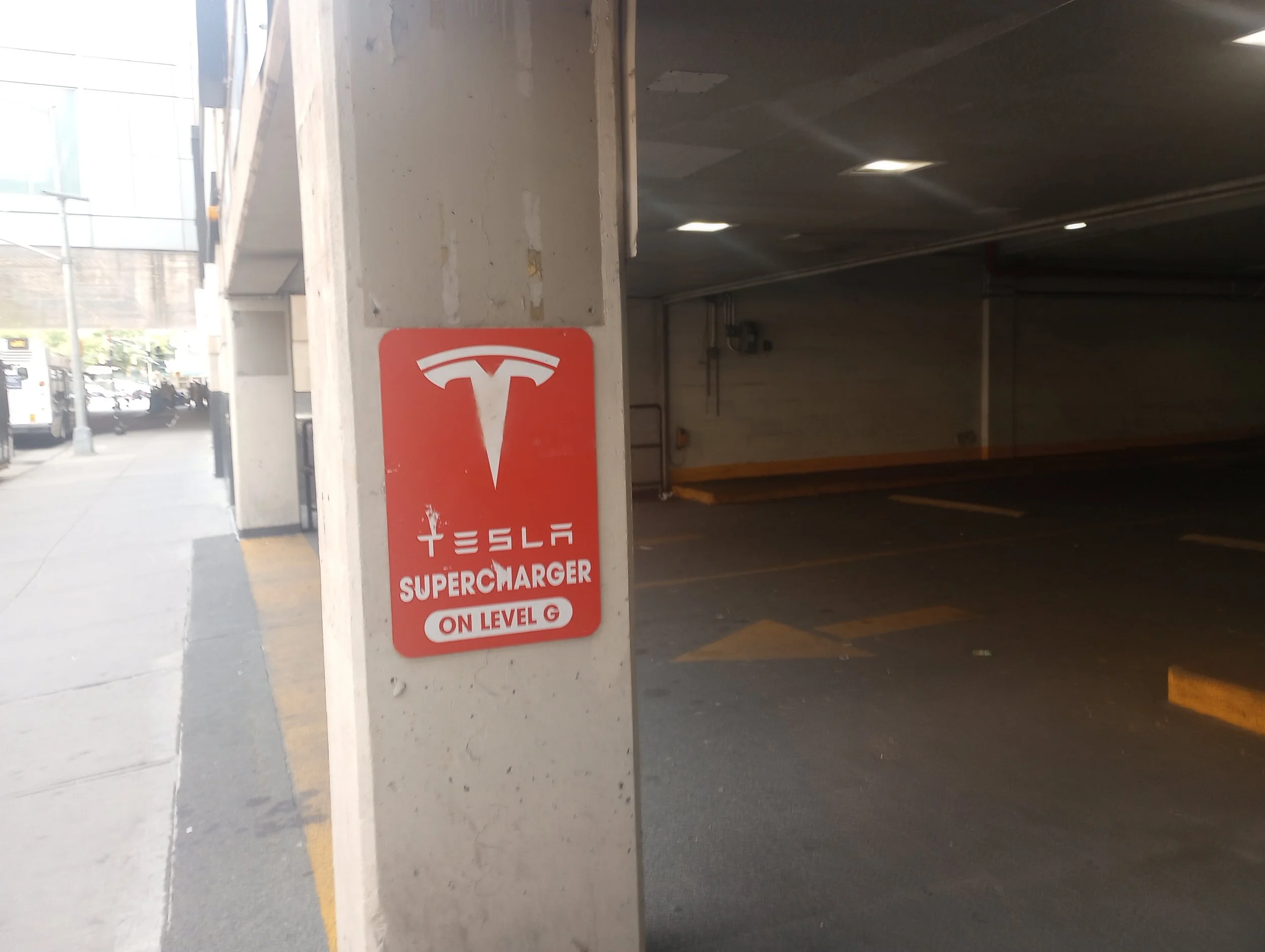
Advertisment for a Tesla product, Queens Center. Photo by Monica Moran 2026.
A storefront church in Reno, Nevada designed to look like a management office. Photo by Monica Moran